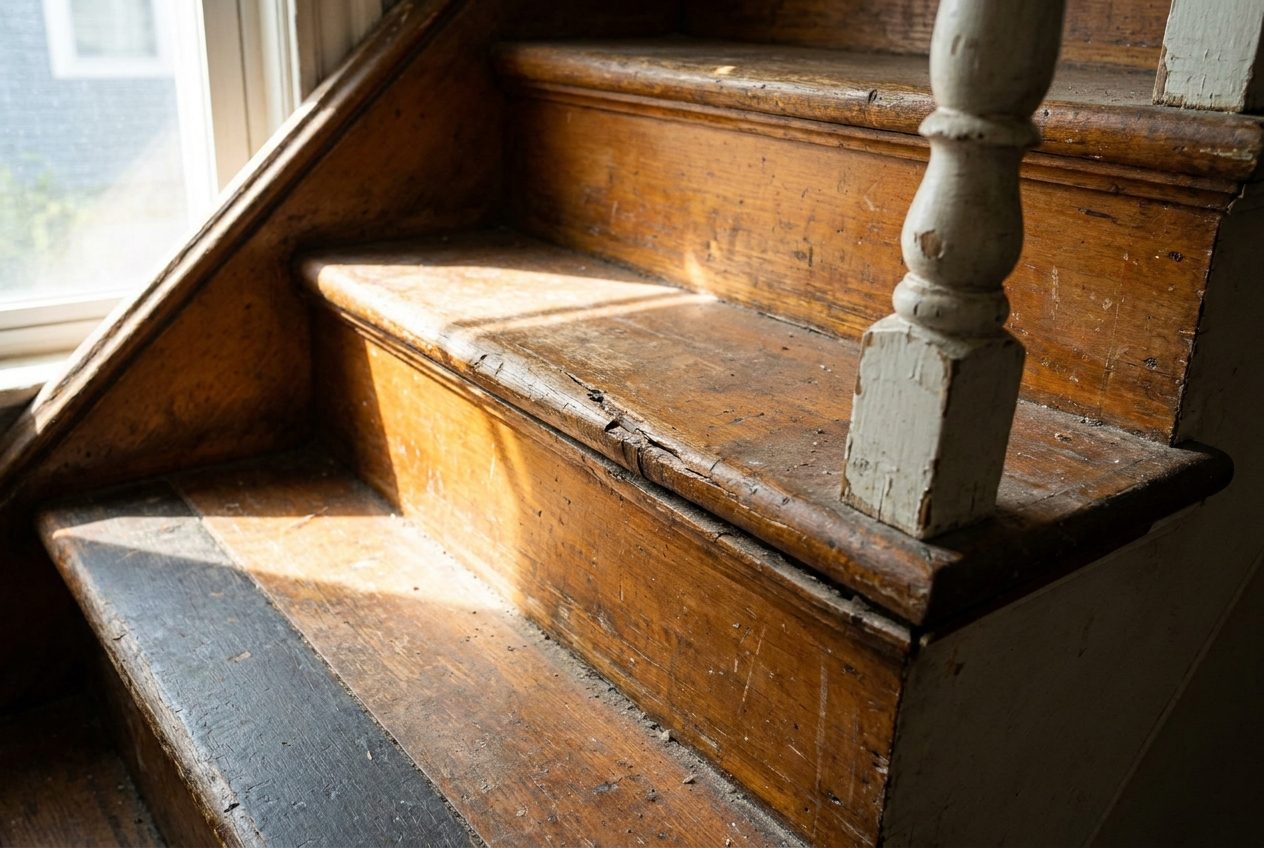
When does a timber staircase need repair? Most homeowners only ask once something feels wrong: a tread that creaks louder than it used to, a handrail that moves when you lean on it, or a nosing that has started to split. Stairs are used every day, so small problems are easy to get used to, and that is exactly why they are often left too long.
This guide explains the warning signs that a timber staircase needs repair, which signs are cosmetic and which are safety issues, what usually causes the damage in Sydney homes, and what to do next.
When Does a Timber Staircase Need Repair? The Quick Answer
A timber staircase needs repair when it squeaks more over time, when treads or risers move, flex or have gaps, when nosings are split or worn enough to be a trip hazard, when the handrail, balusters or newel posts are loose, when the stair sags or bounces, or when there are signs of rot, water damage or termites. Loose balustrades, soft treads and sagging stringers are safety issues and should be fixed promptly.
- Cosmetic: worn finish, minor dents, small surface splits
- Repair soon: squeaks getting worse, gaps opening, worn nosings
- Repair promptly: loose balustrade, soft or moving treads, cracked nosings
- Urgent: sagging stringers, broken treads, rot or termite damage
How a Timber Staircase Holds Together
Understanding the parts makes it easier to answer the question of when does a timber staircase need repair. A typical stair has two sloping stringers that carry the load, treads you step on, risers between the treads, and a balustrade made up of newel posts, balusters and a handrail. Hidden underneath are wedges, glue blocks and fixings that keep the treads and risers tight in the stringers.
Most stair problems start when those hidden joints loosen, or when one of the main structural members is weakened by wear, water or insects.
12 Signs a Timber Staircase Needs Repair
1. Squeaks that are getting louder or spreading
Some squeaking is normal in old stairs. But squeaks that spread to more treads or get louder suggest joints are loosening and the stair is moving more than it should.
2. Treads that move, rock or flex
A tread that moves underfoot has lost its fixing to the stringers or risers. Left alone, it wears the joint further and can eventually split.
3. Gaps between treads, risers and stringers
Gaps that open up, especially if they change with the seasons, show the joints have loosened or timber has shrunk.
4. Worn, cupped or split nosings
The front edge of each tread takes the most wear. A worn, rounded or split nosing is a trip hazard and should be repaired.
5. Cracked or broken treads
A crack across a tread is a structural problem. It should be replaced, not just filled.
6. Loose handrail
A handrail that moves when you lean on it is a safety issue, particularly for children and older people.
7. Wobbly newel posts
Newel posts anchor the balustrade. If one moves, the whole balustrade is weakened.
8. Loose or missing balusters
Loose balusters weaken the balustrade, and missing ones create gaps a child could fall through.
9. A stair that sags or bounces
If the stair dips in the middle or feels springy, the stringers may be undersized, cracked or damaged.
10. Cracks in walls or plaster beside the stair
Cracking next to the stair can show the stair, or the structure it is fixed to, is moving.
11. Soft timber, staining or musty smells
Signs of moisture near the bottom of the stair or under it can mean rot has started.
12. Termite signs
Mud tubes, hollow-sounding timber or damaged timber near the base of the stair mean you should call a licensed pest controller before any repairs.
How Serious Is Each Sign?
| Sign | Usually means | How soon to act |
|---|---|---|
| Worn finish, small dents | Normal wear | Refinish when convenient |
| Occasional squeak | Minor joint movement | Monitor |
| Squeaks spreading or louder | Joints loosening | Repair soon |
| Gaps opening at treads or risers | Loose joints or shrinkage | Repair soon |
| Worn or split nosings | Trip hazard | Repair promptly |
| Loose handrail, newel or balusters | Fall risk | Repair promptly |
| Cracked or broken tread | Structural failure of the tread | Urgent: avoid that tread |
| Sagging or bouncy stair | Stringer problem | Urgent: get it inspected |
| Rot or termite signs | Timber damage | Urgent: pest control, then repair |
What Causes Timber Stairs to Fail in Sydney Homes
Daily wear
The same few spots on each tread are used thousands of times a year. Nosings and finishes wear first.
Seasonal movement
Sydney’s humid summers and drier winters make timber swell and shrink. Over years, this loosens wedges and glue joints.
Poor original construction
Undersized stringers, missing glue blocks or poor fixings at the top and bottom of the stair show up as movement and squeaks over time.
Renovations
Stringers cut to fit a cupboard or services, or a stair re-fixed after a renovation, can be weakened.
Water and termites
Internal stairs near wet areas, and external stairs exposed to weather, can rot. Termites can damage the base of a stair where it meets the ground floor.
When Does a Timber Staircase Need Repair Outside?
External timber stairs on decks, verandahs and balconies need repair more often than internal ones. Look for:
- Soft or split treads, especially at the ends
- Rot at the bottom of stringers where they meet the ground or a slab
- Corroded fixings and brackets
- Loose or rotted balusters and handrails
- Slippery, worn surfaces
Rotted stringers on outdoor stairs can fail suddenly, so they should be checked regularly. Our decking builder Sydney and verandah builder Sydney pages cover the structures they connect to.
What the Repair Usually Involves
- Squeaks: re-glue, re-wedge and block joints from below, or use concealed fixings from above.
- Loose treads: re-fix to stringers and risers.
- Worn or broken treads and nosings: replace with matched timber and finish to blend.
- Loose balustrade: re-fix newel posts into structure, tighten or replace balusters, re-secure the handrail.
- Sagging stringers: strengthen or replace, with the stair propped.
- Rot or termites: treat termites first, then replace damaged timber.
For an idea of cost, our guide to staircase repair cost in Sydney explains what drives the price and shows published NSW figures for new stairs and balustrades.
When Does a Timber Staircase Need Repair? Signs by Stair Type
Carpeted stairs
Carpet hides wear and small cracks. Watch for treads that feel soft or uneven through the carpet, squeaks, and carpet that has started to pull away at the nosing, which can mean the nosing underneath is damaged.
Polished timber stairs
Wear shows quickly in the finish. Look for grey, worn patches at the centre of treads, split nosings and gaps opening at the ends of treads. Refinishing early protects the timber.
Painted stairs
Paint hides gaps until it cracks along the joints. Cracked paint lines at tread and riser joints show movement.
Open-riser stairs
With no risers, treads rely entirely on their fixing to the stringers. Any movement or flex is a warning sign. Gaps between treads must not be large enough to let a 125 mm sphere pass through under current requirements, so older open stairs may need attention if young children use them.
Heritage stairs
Original stairs in terraces and federation homes are often beautifully made but very old. Loose balusters, worn treads and a handrail that has dried out and loosened are common. Repair is almost always preferable to replacement.
What a Staircase Inspection Should Cover
- Every tread and riser for movement, splits and wear
- Nosings for wear, splits and trip hazards
- Joints between treads, risers and stringers
- Stringers, from below where possible, for cracks, sag, rot and cuts
- Fixings at the top and bottom of the stair
- Newel posts, balusters and handrail for movement and gaps
- Signs of moisture, rot or termites
- Safety improvements worth considering
A good inspection gives you a clear list of what needs repair now, what can wait, and what is cosmetic.
Real-World Examples
A squeak that became a loose tread
A homeowner ignored a squeak for two years. By the time they called, the tread had worked loose and the joint had worn. A quick re-glue and re-wedge early would have been simpler than replacing the tread later.
A wobbly handrail on a family stair
The newel post at the bottom had lost its fixing to the floor. Re-fixing it into the floor structure made the whole balustrade solid again.
Soft outdoor stair treads
External deck stairs had rotted at the tread ends and the bottom of the stringers, where water collected. The stair was rebuilt with durable timber and galvanised brackets, with the bottom of the stringers kept clear of the ground.
A sagging stair after a renovation
A stringer had been cut to fit a new cupboard underneath. The stringer was strengthened and the cupboard framing adjusted so it no longer relied on the cut stringer.
What to Do If You Spot These Signs
- Keep people off any tread that is cracked, broken or soft.
- Avoid leaning on a loose handrail until it is fixed.
- If you see termite signs, call a licensed pest controller before disturbing anything.
- Book an inspection with a licensed carpenter.
- Get a written scope and quote, especially for work over $5,000 including GST.
Safety Standards and Older Stairs
Many older stairs were built before current requirements. The National Construction Code Housing Provisions set requirements for new stairs, including no more than 18 risers in a flight and limits on openings that would let a 125 mm sphere through. You are not always required to upgrade an existing stair, but when you repair it, it is worth closing large gaps in balustrades, making handrails secure and fixing trip hazards, especially if children or older people use the stair.
Repair or Replace the Whole Stair?
| Situation | Usually repair | Consider replacing |
|---|---|---|
| Squeaks and loose joints, sound timber | ✔ | |
| A few worn or cracked treads | ✔ | |
| Loose but sound balustrade | ✔ | |
| Most treads worn through | ✔ | |
| Stringers rotted or split along their length | ✔ | |
| Stair layout changing in a renovation | ✔ | |
| Original heritage stair | ✔ (preferred) |
In most homes, the honest answer to when does a timber staircase need repair rather than replacement is: whenever the stringers are sound. Treads, nosings and balustrades can all be repaired or replaced individually.
Contracts and Licences
For residential building work worth more than $5,000 including GST, NSW requires a licensed contractor and a written contract, with deposits capped at 10 percent. Check the carpenter’s licence before work starts using the NSW Government licence check. Our guide on how to check a builder’s licence in NSW explains how, and the NSW Government contracts guidance sets out the rules.
Timber Staircases Across Sydney
Inner West and inner city terraces
Steep, narrow original stairs are common. They are often worth repairing rather than replacing. See carpenter Rozelle.
St George, Georges River and Bankstown
Two-storey homes from recent decades, where squeaks and worn treads are the most common issues. See carpenter St George.
Sutherland Shire
Split-level homes and external stairs on sloping blocks, where weather exposure causes most repairs.
A Simple Self-Check for Your Stairs
- Walk up and down slowly and note any squeaks or movement.
- Press on each tread near the front edge and at each end.
- Check each nosing for wear, splits or loose pieces.
- Push firmly on the handrail and each newel post.
- Check balusters for movement and gaps.
- Look underneath, if accessible, for loose wedges, cracks, damp or termite signs.
- For outdoor stairs, probe the bottom of stringers and the ends of treads with a screwdriver.
If several of these checks turn up problems, it is a clear answer to the question of when does a timber staircase need repair: now.
How to Keep Your Stairs in Good Condition
- Fix squeaks and loose parts early
- Refinish worn treads before the timber itself wears
- Keep external stairs clean, coated and well drained
- Keep termite inspections up to date
- Avoid cutting stringers during renovations without checking structure
The Short Answer for Busy Homeowners
A timber staircase needs repair as soon as anything moves that should not move. Squeaks on their own can wait a short while, but a tread that rocks, a nosing that is split, a handrail or newel post that shifts when you lean on it, or a stair that bounces in the middle should be looked at by a licensed carpenter promptly. Signs of rot or termites mean you should call a licensed pest controller first, then a carpenter. Early repairs are usually simple; late repairs often mean replacing parts.
Who Is Most at Risk on a Faulty Stair?
Stairs are one of the most common places for falls at home. A small fault matters more when the people using the stair are less steady or less careful:
- Young children: large gaps between balusters, loose rails and uneven treads are the main risks.
- Older people: worn nosings, poor lighting and handrails that stop short or move are the main risks.
- Anyone carrying things: a tread that rocks or a nosing that crumbles is hard to notice when your hands are full.
- Visitors and tenants: they do not know which tread to avoid.
If anyone in these groups uses your stair, the answer to when does a timber staircase need repair is usually “sooner rather than later”.
Seasonal Signs to Watch in Sydney
Sydney’s climate makes timber move through the year. Watch for:
- Summer humidity: treads and risers swell, which can make squeaks quieter but hide loose joints.
- Winter dryness and heating: timber shrinks, gaps open and squeaks get louder.
- After heavy rain: damp patches, swelling or musty smells near the base of the stair, especially in older homes with damp subfloors.
A stair that gets noticeably worse from one season to the next is telling you its joints are loosening.
Landlords and Strata
If you rent out a property or manage a strata building, a faulty stair is also a maintenance and safety obligation. Keep records of inspections and repairs, fix loose balustrades and trip hazards promptly, and use a licensed contractor with insurance. In strata buildings, check whether the stair is lot property or common property before arranging work, because that decides who is responsible.
What Will It Cost?
Most repairs for the signs above are priced after an inspection, because access, timber matching and hidden damage vary. Squeaks and loose handrails are usually small jobs; replacing treads, balusters or stringers costs more. For published NSW reference prices and what drives the number, see our guide to staircase repair cost in Sydney.
Quick Reference: Sign, Likely Cause, Likely Repair
| Sign | Likely cause | Likely repair |
|---|---|---|
| Squeak on one tread | Loose wedge or glue block | Re-glue and re-wedge, or concealed screws |
| Squeaks on many treads | General shrinkage and loose joints | Re-fix joints along the flight |
| Tread rocks | Lost fixing to stringer or riser | Re-fix, or replace if split |
| Split nosing | Wear and impact | Replace nosing or tread |
| Handrail moves | Loose brackets or newel | Re-fix into structure |
| Newel post moves | Failed fixing at floor or stringer | Open up and re-secure |
| Stair bounces | Undersized, cut or cracked stringer | Strengthen or replace stringer |
| Soft timber at base | Moisture or termites | Pest check, then replace damaged timber |
Use this table as a starting point only. A carpenter’s inspection confirms the cause before any work is priced.
Do Not Forget Lighting
Many stair accidents happen on stairs that are structurally fine but poorly lit. If your stair is dark at the top or bottom, or the light switch is only at one end, it is worth adding lighting or a two-way switch when you arrange repairs. Contrasting nosings on external stairs also make each step easier to see, especially at night or in rain. Good lighting does not replace repairs, but it makes the remaining risk much lower.
When Does a Timber Staircase Need Repair? Key Takeaways
- Worsening squeaks, moving treads and opening gaps mean joints are loosening.
- Loose balustrades, worn nosings and cracked treads are safety issues.
- Sagging stairs, rot and termite damage need urgent attention.
- External stairs need more frequent checks than internal ones.
- Early repairs are usually simpler and cheaper.
Why Choose PROBUILDING AND CARPENTRY?
We are an owner-led, licensed NSW carpentry business (licence 458148C) based in Peakhurst, with more than eight years of experience in Sydney homes. We repair stairs so they are solid, safe and quiet, and we match existing timber where possible. See our staircase repairs Sydney page or our contact page.
Frequently Asked Questions
When does a timber staircase need repair?
When squeaks get worse, treads move or crack, nosings wear or split, the balustrade is loose, the stair sags, or there are signs of rot or termites. Safety issues should be fixed promptly.
Is a squeaky staircase a problem?
An occasional squeak is common in older stairs. Squeaks that spread or get louder mean joints are loosening and should be repaired before they cause more wear.
Is a loose handrail dangerous?
Yes. A loose handrail, newel post or balustrade can fail when someone leans on it or falls against it, so it should be fixed promptly.
Can a cracked stair tread be repaired?
A cracked tread should usually be replaced rather than filled, because the crack weakens it. New treads can be matched to the existing timber.
How do I know if my stair stringers are damaged?
A sagging or bouncy stair, cracks in nearby walls, or visible cracks, rot or termite damage in the stringers are signs. A carpenter can inspect from below.
How often should outdoor timber stairs be checked?
At least once a year and after heavy weather. Probe the bottom of stringers and the ends of treads for soft timber.
Should I repair or replace an old timber staircase?
Repair is usually best when the stringers are sound, especially for original heritage stairs. Replacement makes sense when the structure has failed or the layout is changing.
Who should I call to repair a timber staircase?
A licensed carpenter. If termites are suspected, call a licensed pest controller first.
Last updated: October 2026.
about
PROBUILDING & CARPENTRY
Building Craftsmanship. Building Trust. Building Tomorrow

Let’s Build Something Exceptional
