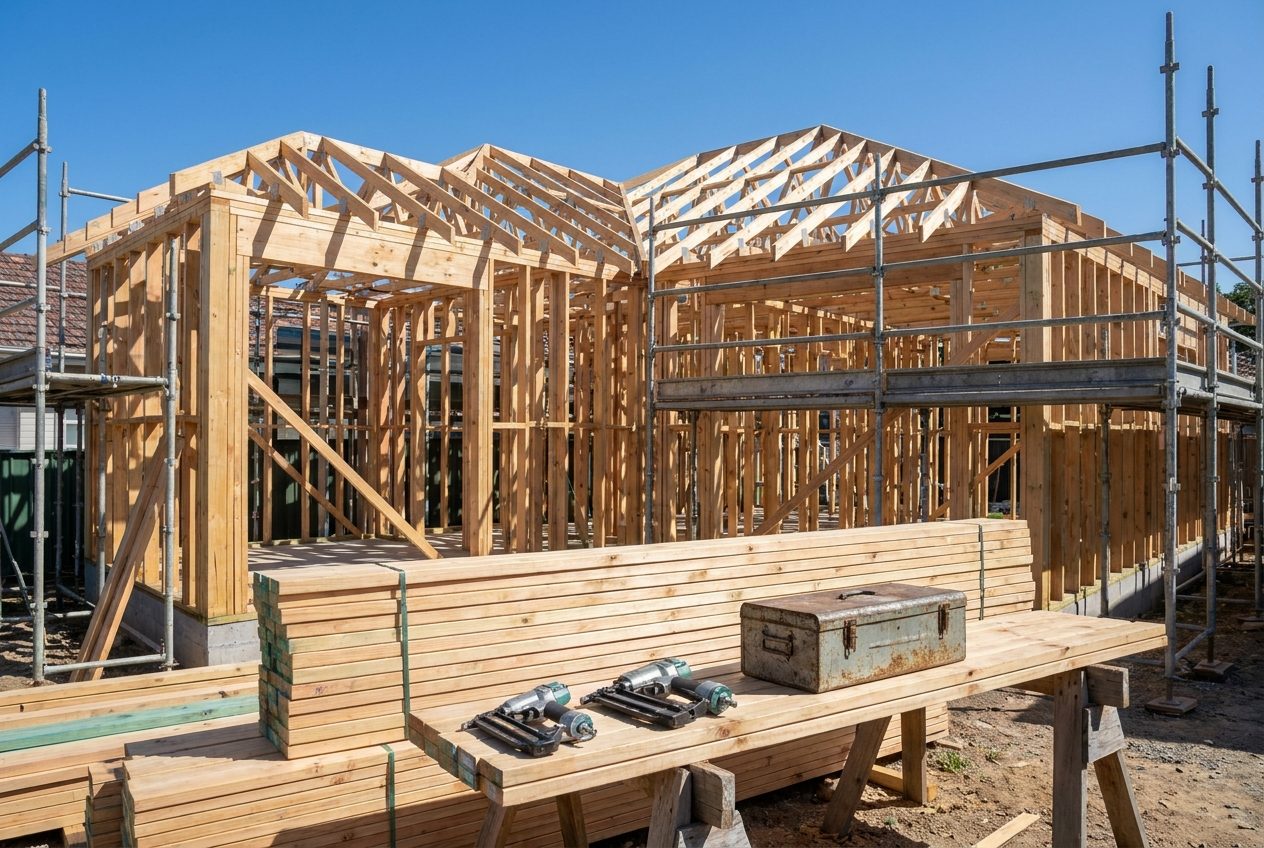
Knowing how to choose a carpentry subcontractor is one of the most valuable skills a Sydney builder or project manager can have. The carpenter you bring in for framing, fit-off or structural work sets the pace for every trade that follows. A good one keeps the job on program and the frame square. A poor one creates rework, delays and defects that someone else has to fix.
This guide explains how to choose a carpentry subcontractor in Sydney: the licences and insurance to check, the paperwork NSW requires, the questions to ask, the red flags, and how to set the relationship up so it works for both sides.
How to Choose a Carpentry Subcontractor: The Quick Answer
To choose a carpentry subcontractor in Sydney, check that they hold a current NSW contractor licence in the right category, carry public liability and workers compensation insurance where required, provide subcontractor statements with their invoices, have relevant experience on similar projects, and can commit to your program. Then agree the scope, rates, payment terms and variations in a written subcontract before work starts.
- Check the licence on the NSW Government licence check
- Get certificates of currency for insurance
- Require a subcontractor statement with every payment claim
- Look at recent work and speak to builders they work for
- Put scope, price, program and variations in writing
What a Carpentry Subcontractor Does
A carpentry subcontractor is a licensed carpenter or carpentry business engaged by a builder, rather than directly by the homeowner, to carry out a defined part of the work. On residential projects in Sydney that usually means one or more of these stages:
- Frame stage: wall frames, floor framing, roof framing and truss installation. See timber framing Sydney.
- Structural work: beams, lintels, posts and structural repairs. See structural carpentry Sydney.
- Lock-up: external doors, windows and cladding.
- Fit-off: internal doors, skirting, architraves, built-ins and stairs.
- Outdoor structures: decks, pergolas, carports and verandahs.
- Remedial work: subfloor and rot repairs, strata repairs and defect rectification.
Some subcontractors specialise in one stage, such as frame-only crews. Others cover several. Knowing which you need is the first step in learning how to choose a carpentry subcontractor that fits your job.
Step 1: Check the Licence
In NSW, a contractor licence is required to carry out, advertise or contract for residential building work worth more than $5,000 including GST in labour and materials. The NSW Government says this also applies when you subcontract for work that forms part of a larger contract over $5,000. The same page lists fines for unlicensed work of up to $22,000 for individuals and $110,000 for companies.
When you check the licence:
- Use the NSW Government licence check.
- Confirm the licence is current and covers carpentry or general building work.
- Make sure the name on the licence matches the person or company you are engaging.
- Look for conditions, suspensions or disciplinary action shown on the register.
- Record the licence number on your subcontract and site records.
Our guide on how to check a builder’s licence in NSW walks through the check step by step.
Step 2: Check Insurance
| Insurance | What it covers | What to ask for |
|---|---|---|
| Public liability | Injury to third parties or damage to property caused by their work | A current certificate of currency and the cover amount |
| Workers compensation | Their employees if injured at work | A certificate of currency if they employ workers |
| Personal accident or income protection | A sole trader’s own injury | Ask whether they hold it; it reduces disputes if they are hurt on your site |
| Tools and equipment | Their own gear | Optional, but signals a well-run business |
Check expiry dates and diarise renewals. A certificate that expires halfway through your project is not much use.
Step 3: Get Subcontractor Statements
In NSW, a principal contractor should obtain a subcontractor’s statement each time a subcontractor seeks payment. According to HIA, the statement confirms the subcontractor has workers compensation in place where required, has paid payroll tax due for employees who worked on the contract, and has paid those employees properly. Without it, the principal contractor can withhold payment. HIA also notes the statement should be kept for seven years.
A subcontractor who supplies these statements without being chased is usually one who runs a tidy business.
Step 4: Check Experience on Similar Work
Carpentry is broad. A great fit-off carpenter may not be the right person to frame a second-storey addition, and a fast frame crew may not have the patience for heritage repairs. When you assess how to choose a carpentry subcontractor for a specific project, ask:
- What similar projects have you done in the last year?
- Can I see photos, or visit a current site?
- Which builders do you regularly work for, and can I call one?
- Have you worked with engineered beams, trusses or steel connections like those on my plans?
- Are you comfortable working in occupied homes or strata buildings, if relevant?
Matching experience to project type
| Project type | Experience to look for |
|---|---|
| Ground floor extension | Tying new framing into existing structure, roof junctions, flashing details |
| Second-storey addition | Floor framing over existing ceilings, engineered beams, temporary propping |
| New dwelling or duplex | Full frame stages, truss installation, bracing and tie-downs to AS 1684 |
| Heritage renovation | Matching profiles, repairing original timber, working in conservation areas |
| Strata and remedial work | Working around residents, building managers and common property rules |
| Decks, pergolas and carports | Footings, outdoor timber durability, balustrades and approvals |
Step 5: Check Capacity and Reliability
The best carpenter in Sydney is no use if they cannot start when your frame is due. Ask:
- How many people will be on site, and who supervises them?
- Can you commit to our start date and duration?
- What other jobs will you be running at the same time?
- How do you handle wet weather and delays from other trades?
- Do you supply your own tools, nail guns, scaffolding or lifting equipment?
Reliability is often the deciding factor when builders explain how to choose a carpentry subcontractor. A crew that turns up when they say they will is worth more than a slightly lower rate.
Step 6: Understand How They Price
Carpentry subcontractors in Sydney price work in a few common ways:
- Fixed price per stage: for example, a set price for the frame stage from plans. Clear, but needs a precise scope.
- Per square metre or per item: common for framing and some fit-off work.
- Day rate or hourly: common for remedial work and small jobs where the scope is uncertain.
Whichever method you use, the scope must be specific: which drawings, what is included, what is supplied by you (materials, trusses, scaffolding) and what is not. Our guide to understanding carpentry quotes in Sydney covers pricing in more detail.
Step 7: Put It in a Written Subcontract
A written subcontract protects both sides. It should cover:
- Scope of work, drawings and specifications
- Price, rates and what materials each party supplies
- Program, start date and completion date
- Payment claims, payment terms and retention, if any
- Variations: how they are requested, priced and approved in writing
- Defects: how they are reported and fixed
- Insurance, licence numbers and subcontractor statements
- Work health and safety responsibilities
NSW also has security of payment laws that give subcontractors rights to progress payments for construction work. Clear payment terms in the subcontract reduce the chance of disputes.
How to Choose a Carpentry Subcontractor by Defining the Scope First
Most problems between builders and carpentry subcontractors start with a vague scope. Before you ask anyone to price, write down exactly what is included. Here are scope checklists for the two most common stages.
Frame stage scope checklist
- Drawings and engineering revision numbers the price is based on
- Wall framing, including setting out, plates, studs, noggings and openings
- Bracing, tie-downs and connections as specified
- Floor framing, flooring and any sheet bracing
- Roof framing or truss installation, including truss bracing and tie-downs
- Lintels, beams and posts, and who supplies engineered members
- Fascia and barge installation, if included
- Who supplies timber, trusses, fixings, scaffolding and edge protection
- Cleaning up offcuts and waste
- Rectifying items from the frame inspection
Fit-off scope checklist
- Internal doors, frames and hardware fitting
- Skirting, architraves and any moulding profiles
- Built-in wardrobes, shelving and joinery installation
- Stair installation or stair repairs
- Access panels, manholes and minor items
- Who supplies materials and hardware
- Protection of finished floors and surfaces
When every subcontractor prices the same detailed scope, you can compare like with like. This is the single most useful step in learning how to choose a carpentry subcontractor who will not surprise you halfway through the job.
Comparing Two Carpentry Subcontractor Quotes
| Item | What to check |
|---|---|
| Scope | Do both quotes cover the same drawings, stages and inclusions? |
| Materials | Who supplies timber, trusses, fixings and hardware? |
| Labour | Crew size, supervision and expected duration |
| Equipment | Nail guns, scaffolding, lifting gear, waste bins |
| Program | Start date, duration and availability for return visits |
| Payment terms | Claim stages, timing and retention |
| Variations | Rates for extra work and how it is approved |
| Compliance | Licence, insurance and subcontractor statements |
Communication and Site Coordination
A carpentry subcontractor works between other trades: concreters and bricklayers before them, plumbers, electricians, plasterers and painters after them. The best ones communicate early about what they need and when. Expect a good subcontractor to:
- Confirm their start date a few days ahead and flag anything that is not ready
- Raise drawing clashes or missing details before they build, not after
- Coordinate set-outs with plumbers and electricians where services run through framing
- Leave the frame ready for the frame inspection, with any issues listed
- Keep the site tidy so the next trade can start straight away
When you are deciding how to choose a carpentry subcontractor, ask how they communicate on site. Do they use messages, photos, a site diary? A subcontractor who shares progress photos saves the builder site visits and catches problems early.
Work Health and Safety
Carpentry involves work at heights, power tools and heavy materials. Both the builder and the subcontractor have work health and safety duties. Before work starts, agree who provides edge protection and scaffolding, check the subcontractor has safe work method statements for high-risk work such as working at heights, and make sure their team holds a general construction induction card. A subcontractor who takes safety seriously is far less likely to cause delays from incidents on your site.
How to Choose a Carpentry Subcontractor: Red Flags to Avoid
- No licence, or a licence in someone else’s name
- No insurance certificates, or expired ones
- Cash-only payment with no invoices
- Reluctance to provide subcontractor statements
- No references or past work they can show
- Very low prices with vague scope
- Promising to start tomorrow on several jobs at once
- Poor site safety: no edge protection, unsafe ladders, untidy sites
How to Judge Quality on Site
Once a subcontractor starts, quality shows quickly. On a frame, look for:
- Walls plumb and square, and top plates level
- Correct bracing and tie-downs as specified
- Lintels and beams matching the engineering
- Clean, accurate cuts and properly fixed connections
- Openings sized correctly for windows and doors
- A tidy site with offcuts and waste managed
On fit-off, check tight mitres, even reveals around doors, consistent gaps and no hammer marks.
Choosing a Carpentry Subcontractor in Sydney: Local Considerations
St George and the Georges River
Lots of extensions and knock-down rebuilds on post-war blocks. Look for crews experienced in tying new framing into older brick and timber homes. See carpenter St George.
Bankstown and south-west Sydney
Duplexes, granny flats and new dwellings mean full frame stages. Speed and accuracy on truss installation and bracing matter. See carpenter Bankstown.
Sutherland Shire
Sloping blocks and bushfire-prone land. Subcontractors need to understand stepped footings, tall subfloors and bushfire construction requirements.
Inner West and inner city
Terraces, tight access and heritage conservation areas. Choose carpenters used to working through narrow houses and matching original details.
Strata buildings
Building rules, work hours and resident communication. Experience with strata repairs is valuable.
Typical Situations and What to Look For
A builder with a frame stage starting in three weeks
The priority is a crew that can commit to the date, has done similar frames recently and supplies the right equipment. Send the drawings and engineering early, ask for a fixed price per stage, and confirm who supplies trusses and scaffolding.
A renovation where hidden damage is likely
Older Sydney homes often hide rotten bottom plates, termite damage or undersized beams. Choose a carpenter with remedial experience who will stop and report what they find, and agree day rates or variation rates for repairs before work starts. Our guides to signs of damaged bearers and joists and subfloor repair cost in Sydney show the kind of issues that come up.
A strata repair job
Look for experience with building managers, work hours, protection of common areas and resident communication. Paperwork matters even more, because strata managers often need insurance certificates before access is given.
A fit-off on a high-end home
Here, finish quality is everything. Ask to see recent fit-off work in person, check mitres and reveals, and agree protection of finished surfaces.
Questions to Ask, and Why They Matter
- “What is your licence number and who is it issued to?” Confirms they can legally do the work and that the business you pay is the one licensed.
- “Can you send your insurance certificates?” Protects you if something goes wrong on site.
- “Will you provide a subcontractor statement with each claim?” Protects the principal contractor from workers compensation and payroll tax liability.
- “Who will actually be on site?” The person who quotes is not always the person who builds.
- “How do you price variations?” Avoids disputes when plans change.
- “What do you need from us before you start?” Shows whether they plan ahead.
Building a Good Long-Term Relationship
The best builder and subcontractor relationships last years. They are built on a few simple habits:
- Clear drawings and scope before the subcontractor quotes
- Sites ready when the carpenter arrives
- Payments made on time, against clear claims
- Variations agreed in writing before the work is done
- Honest feedback and quick resolution of defects
A carpentry subcontractor who knows they will be paid properly and given a ready site will prioritise your jobs.
If You Are a Homeowner Managing Your Own Project
If you are an owner-builder or managing trades yourself, the same steps apply, with a few extra points. Owner-builder permits have their own rules in NSW, and you take on responsibilities a builder would normally carry. Check licences carefully, insist on written contracts for work over $5,000 including GST, and remember that you, not a builder, will be coordinating the trades.
How to Choose a Carpentry Subcontractor: Summary for Builders
Choose a carpentry subcontractor in Sydney by checking five things in order: a current NSW contractor licence in the right category and in the right name; current public liability and, where they employ workers, workers compensation insurance; willingness to provide a subcontractor statement with every payment claim; recent experience on the same kind of project; and real capacity to meet your program. Then lock in a written scope, price, payment terms and variation process before they start. Reliability and quality on site usually matter more than a small difference in rate.
Trial on a Smaller Job First
If you have not worked with a carpenter before, consider starting with a smaller, lower-risk scope, such as a fit-off package, a deck or a set of repairs, before handing over a full frame stage. A first job shows you how they communicate, how tidy they are, how they handle variations and whether their invoices and paperwork arrive on time. Builders who work this way usually end up with a small pool of reliable subcontractors they can call on for years.
How to Choose a Carpentry Subcontractor: Key Takeaways
- Check the NSW contractor licence, and make sure the name matches.
- Get insurance certificates and subcontractor statements with every claim.
- Match experience to the type of project.
- Agree scope, price, program, payments and variations in a written subcontract.
- Reliability and quality on site matter more than the lowest rate.
Why Choose PROBUILDING AND CARPENTRY?
We are an owner-led, licensed NSW carpentry business (licence 458148C) based in Peakhurst, with more than eight years of experience working for Sydney builders and homeowners. We handle framing, structural carpentry, fit-off and remedial work, and we provide the paperwork builders need. See our carpentry subcontractor Sydney page or visit our contact page.
Frequently Asked Questions
Does a carpentry subcontractor need a licence in NSW?
Yes, for residential building work worth more than $5,000 including GST, including subcontracted work that forms part of a larger contract over $5,000. Check the licence on the NSW Government licence check.
What insurance should a carpentry subcontractor have?
Public liability insurance at a minimum, and workers compensation if they employ workers. Ask for current certificates of currency and check the expiry dates.
What is a subcontractor statement in NSW?
A declaration a subcontractor gives with each payment claim confirming workers compensation, payroll tax and employee wages are in order. Principal contractors can withhold payment without it, and should keep copies for seven years.
How do carpentry subcontractors charge?
Commonly by fixed price per stage, per square metre or per item, or by day rate for remedial work. A clear written scope matters whichever method is used.
How do I know if a carpenter’s framing is good?
Walls should be plumb and square, plates level, bracing and tie-downs as specified, and beams and lintels matching the engineering. Openings should suit the windows and doors.
Should I use a written subcontract?
Yes. A written subcontract covering scope, price, program, payments, variations and defects protects both the builder and the subcontractor.
Can a homeowner hire a carpentry subcontractor directly?
Yes, though the carpenter is then a contractor to you rather than a subcontractor to a builder. The same licence, insurance and written contract rules apply for work over $5,000 including GST.
What are the biggest red flags when choosing a carpenter?
No licence or a mismatched name, no insurance, cash-only terms, no references, vague scope and an unrealistic promise to start immediately.
Last updated: October 2026.
about
PROBUILDING & CARPENTRY
Building Craftsmanship. Building Trust. Building Tomorrow

Let’s Build Something Exceptional
