
Decking Builder Sydney
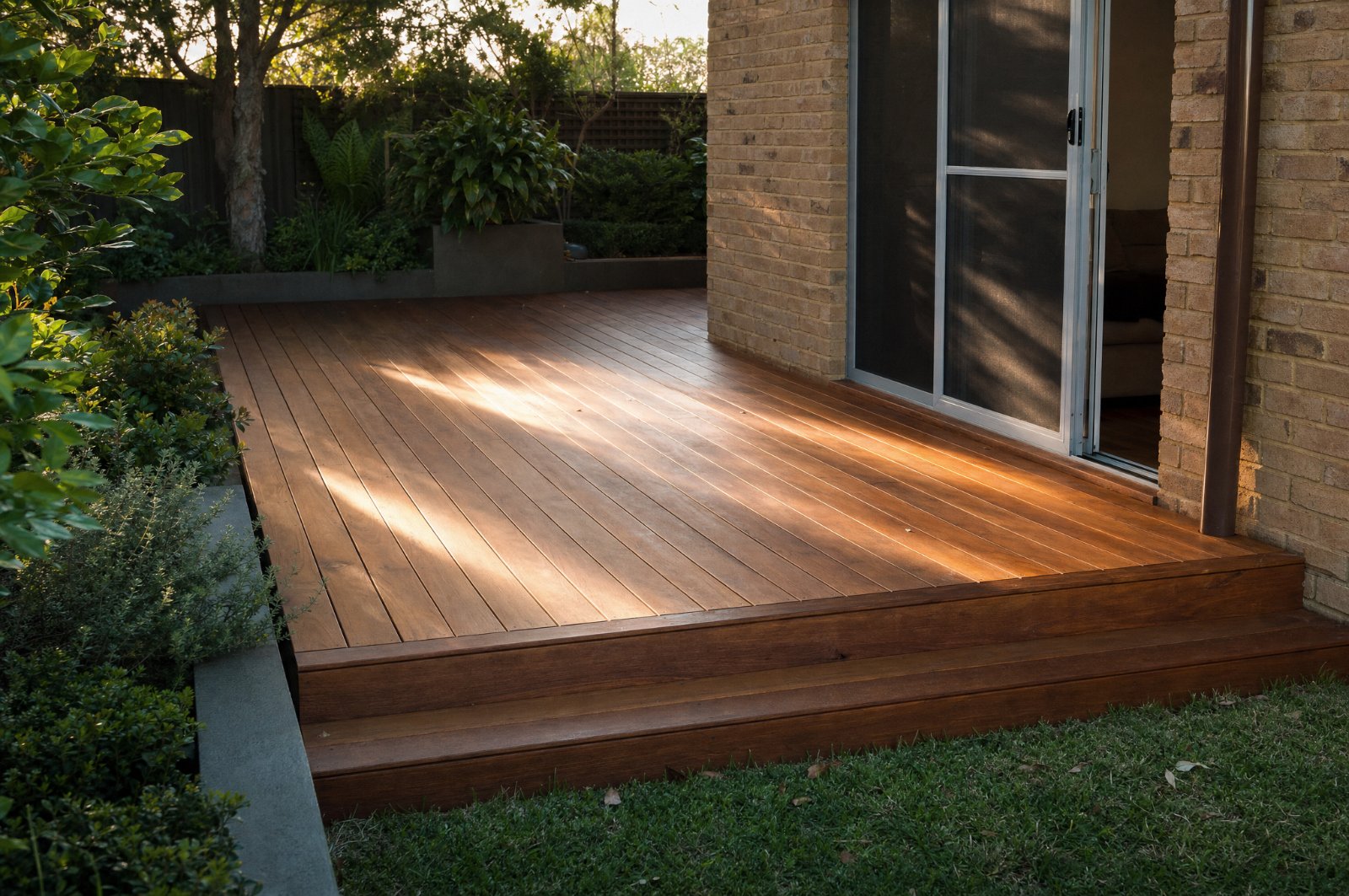
Decking builder Sydney work from Probuilding & Carpentry, owner-led by a licensed NSW carpenter working across Peakhurst, St George, Georges River, the Inner West, Bayside and the Sutherland Shire.
Most decks that fail in Sydney do not fail in the boards. They fail underneath, where the framing sits too close to the ground, the subfloor cannot breathe, or a bearer was never supported properly at the span. By the time the boards feel springy, the problem is years old.
We build timber decks, verandahs and outdoor structures from the ground up, and we spend the time on the part nobody sees, because that is the part that decides whether the deck is still solid in fifteen years.
If you are comparing deck builders in Sydney, that is the thing worth comparing. Most quotes describe the boards in detail and the frame in one line.
On this page
- What our decking work includes
- Decking builder Sydney: timber board options compared
- Why the subframe decides how long your deck lasts
- Deck repairs, board replacement and restoration
- Decks on difficult sites
- Approvals and compliance for decks in NSW
- Decking builder Sydney: what to ask before you sign
- Areas we service
- Frequently asked questions
What Our Decking Work Includes
- New timber deck construction for homes, renovations and extensions
- Deck subframes: footings, posts, bearers, joists and structural support
- Stairs, landings and the framing behind balustrades and screens
- Verandah carpentry and outdoor timber upgrades
- Deck repairs, board replacement and subframe rectification
- Timber deck restoration where the structure is sound and the surface is not
- Decks over existing slabs, on sloping ground and around pool surrounds
- Coordination with pergola, balustrade and landscaping trades
Decking Builder Sydney: Timber Board Options Compared
The board you choose changes the look, the cost and how much work the deck is going to be every summer.
| Board type | What it suits | Upkeep | Worth knowing |
|---|---|---|---|
| Australian hardwood | Entertaining areas and anywhere the deck is the feature | Oil or coat regularly to hold the colour | Dense, hard wearing and the best looking. Left uncoated it silvers off rather than failing. |
| Treated pine | Budget-conscious builds, decks that will be painted or stained | Coating needed, and it moves more than hardwood | The cheapest way to a large deck. Board selection matters more, because pine varies. |
| Composite | Owners who want a set-and-forget surface | Cleaning only, no oiling | Higher material cost and it still needs a properly built timber subframe underneath, with the joist spacing the manufacturer specifies. |
Composite is the one people misunderstand most. It removes the maintenance on the surface. It does not remove the need for the frame under it to be right, and most composite systems need tighter joist centres than a hardwood deck, which changes the framing cost.
Why the Subframe Decides How Long Your Deck Lasts
This is the part of a decking quote worth reading closely.
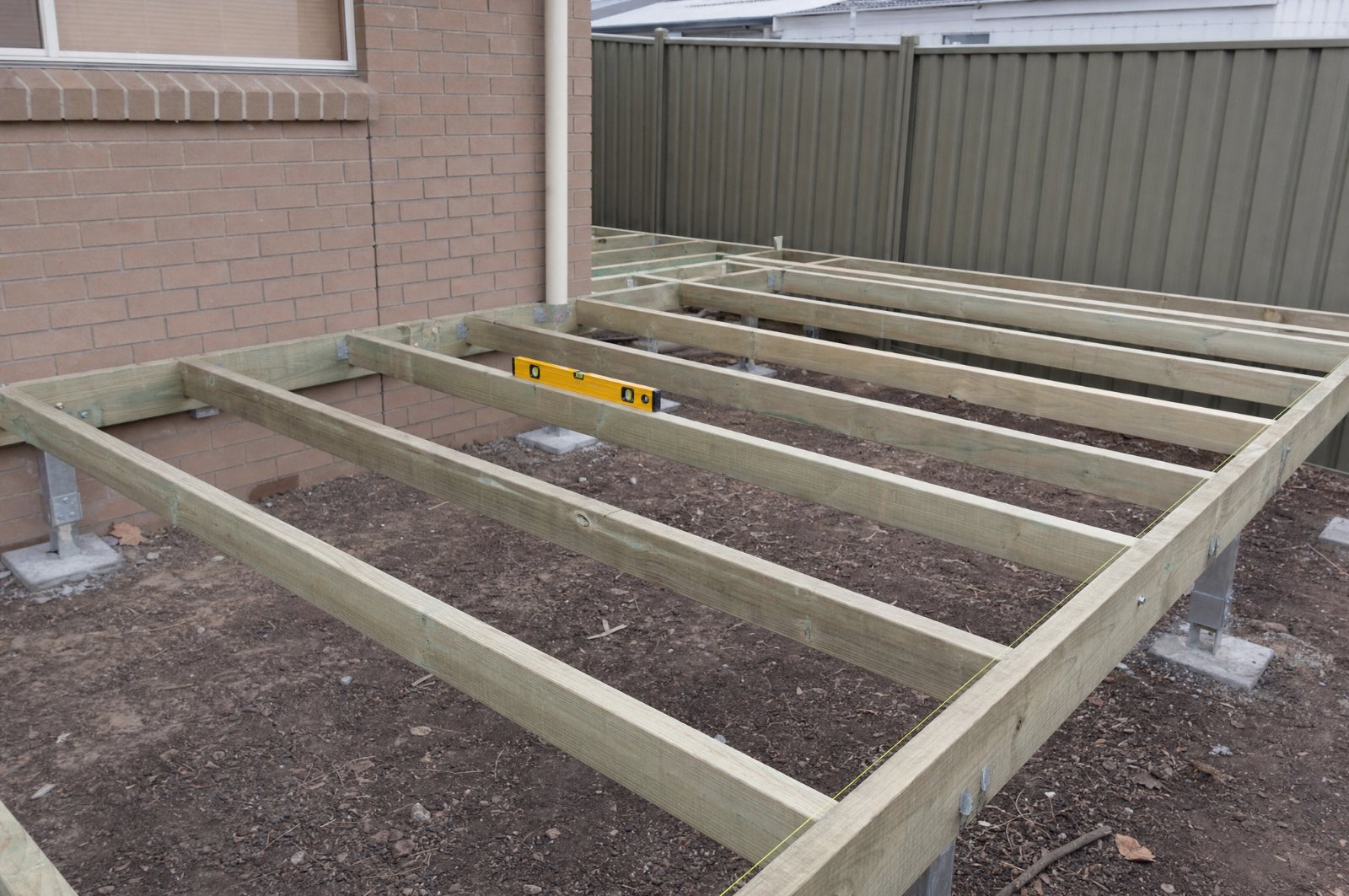
Footings and posts
Every post needs to land on something that will not move, and the post itself needs to be held clear of the ground or the soil. Timber sitting in dirt or in trapped water has a short life, and replacing a rotted post later means lifting the deck above it.
Bearers, joists and spans
Span is not a matter of taste. Timber span tables are published by the industry (see WoodSolutions), and a decking builder Sydney homeowners can trust will work to them rather than by eye. Timber size, spacing and support have to suit the load and the distance being crossed, and the difference between a deck that feels solid and one that bounces is usually one size down on a joist or one row of support left out.
Ventilation and ground clearance
A deck needs air moving underneath it. Low-set decks with no clearance, or decks boxed in on all sides with solid skirting, trap moisture against the framing. That is how a deck built five years ago ends up with soft bearers, and it is also how termites find a way in.
Fixings and detailing at the house
Where the deck meets the building is where water gets in. The ledger fixing, the flashing behind it and the gap between the boards and the wall all matter. A deck fixed hard against a wall with no flashing will eventually push moisture into the framing of the house, which is a much more expensive problem than the deck.
Deck Repairs, Board Replacement and Restoration
Not every tired deck needs replacing. Three different things get called the same job:
- Restoration. The frame is sound, the boards are weathered or grey. Sanding, replacing a handful of boards and recoating brings it back.
- Repair. Some boards are soft, a joist or bearer has gone, or the stairs have dropped. The affected sections get replaced and the rest stays.
- Rebuild. The subframe has failed, the clearance was always wrong, or the deck was not built for the load it now carries. Patching this is money spent twice.
We will tell you which of the three you have, including when it is the third one. If a deck is not worth repairing we say so before you spend anything on it.
Decks on Difficult Sites
Plenty of Sydney blocks are not flat, not accessible and not simple.
Sloping ground means taller posts, more bracing and often stairs, which changes both the engineering and the cost. Decks over an existing slab need a framing method that keeps timber off concrete and still drains. Pool surrounds bring their own requirements around the barrier, and anything built near a pool fence has to respect the non-climbable zone rather than create a new way over the fence. Tight side access decides how material gets to the back yard, and on some sites that alone is a real line in the quote.
Approvals and Compliance for Decks in NSW
Whether a deck needs approval depends on the property and the deck, not on a general rule. Height above ground, distance to boundaries, heritage listings, strata title and proximity to a pool all change the answer, and low decks are treated differently from raised ones.
Two things are worth knowing regardless. A deck raised more than about a metre above the ground generally needs a compliant balustrade, and that height is measured to the ground below, not to the next step. And anything forming part of a pool barrier has rules of its own.
Check what applies to your property through the NSW Planning Portal and your local council before you commit to a design. It is a much cheaper conversation before the posts go in.
Decking Builder Sydney: What to Ask Before You Sign
Four questions separate quotes that are actually comparable from quotes that only look like each other.
- What size and spacing are the joists and bearers, and what are they made of? If the quote does not say, you cannot compare it to another one that does.
- How are the posts supported and kept clear of the ground? Stirrups on footings, or timber straight into soil. The difference is years.
- What happens where the deck meets the house? Ask about the ledger fixing and the flashing behind it, because this is the detail that can put water into the building.
- What is excluded? Balustrades, stairs, coating, demolition of the old deck and waste removal are the usual four, and any of them can be the reason one quote looks cheaper.
A deck builder who can answer those four without hesitating has thought about your site. One who talks only about boards and a square metre rate has priced an average deck.
Our Process
- Site discussion. We confirm what the deck is for, access, timing, site constraints and which other trades are involved.
- Inspection and set-out. We check levels, ground conditions, drainage, wall junctions and the doors or windows the deck has to work with.
- Clear quote. Priced on the actual scope, with the framing and the boards itemised separately so you can see what you are paying for.
- Construction. Subframe first, boards second, with attention to structure, finish, safety and site cleanliness.
- Final check. We walk the deck with you and confirm it is ready for balustrades, coating or use.
Areas We Service
As a decking builder Sydney wide, we are based around Peakhurst and build decks across the St George and Georges River area, the Sutherland Shire, Bayside, the Inner West and greater Sydney. That includes Peakhurst, Riverwood, Lugarno, Mortdale, Penshurst, Hurstville, Oatley, Beverly Hills, Kingsgrove, Roselands, Padstow, Drummoyne, Mosman, Maroubra and the surrounding suburbs. If your suburb is nearby, get in touch and we will confirm availability.
Why Choose Probuilding & Carpentry
- Licensed NSW carpenter, licence 458148C
- Owner-led work by Hamzah Elfoul, with more than eight years of hands-on experience
- Subframe built properly before anyone thinks about the boards
- Quotes priced on the real scope, with framing and decking itemised
- Straight answer on whether a tired deck is worth repairing or not
- A decking builder Sydney homeowners and builders both use, direct or as the trade within a bigger job
Frequently Asked Questions
How much does a deck cost in Sydney?
It depends on the size, the board you choose, how high the deck sits, the ground conditions, whether stairs are involved and how hard it is to get material to the site. Our guide to deck cost in Sydney goes through what drives the number and what a proper quote should itemise.
Do you build new timber decks?
Yes. New decks, verandahs and outdoor timber structures for Sydney homes, renovations and extensions, including the subframe, stairs and the framing behind balustrades.
Can you repair an existing deck rather than replace it?
Often, yes. If the subframe is sound and the problem is boards, a few joists or the stairs, repairing is the sensible option. If the framing has failed or the deck never had the clearance it needed, we will tell you that a rebuild is the better spend rather than taking the repair work.
How long does a timber deck last in Sydney?
It depends far more on how it was built than on the board. A hardwood deck with proper clearance, ventilation and fixings, kept coated, lasts a long time. The same boards on a frame sitting in damp soil with no airflow will be soft well before their time.
Do I need council approval for a deck?
It depends on the property and the deck. Height, boundary setbacks, heritage listings, strata title and pool proximity all change the answer. Check with your council or the NSW Planning Portal before finalising a design.
Does a deck need a balustrade?
A deck raised more than about a metre above the ground below generally needs a compliant balustrade. Lower decks may not. Your council or a certifier can confirm what applies to your specific deck.
Hardwood, treated pine or composite?
Hardwood for looks and durability with regular coating, treated pine for the lowest material cost with more upkeep and more movement, composite for a low-maintenance surface at a higher material price. Composite still needs a properly built timber frame under it, usually at tighter joist centres.
How long does building a deck take?
It varies with size, height, ground conditions, access and weather. Footings and the subframe take the time that they take, and the boards go down comparatively quickly. Any builder should give you a range with the assumptions attached rather than a flat number.
Do you work with builders, or only direct with homeowners?
Both. We work as the carpentry trade within larger renovation and extension projects, and direct with homeowners on standalone decks, repairs and outdoor work.
Request a Quote
If you are planning a new deck, or you have one that has started to move underfoot, the useful next step is someone standing on it. Call the decking builder Sydney locals in the St George and Georges River area already use. Call Hamzah on 0449 576 839 or visit our contact page for a quote priced on the actual scope.
Related work: structural carpentry Sydney, timber framing Sydney, cladding installation Sydney and carpenter Sydney. If you are pricing outdoor work, see our guides to deck cost and pergola cost in Sydney.
Useful resources: before engaging any builder or carpenter in NSW, you can verify a contractor licence through NSW Fair Trading, and check whether your project needs approval via the NSW Planning Portal.